

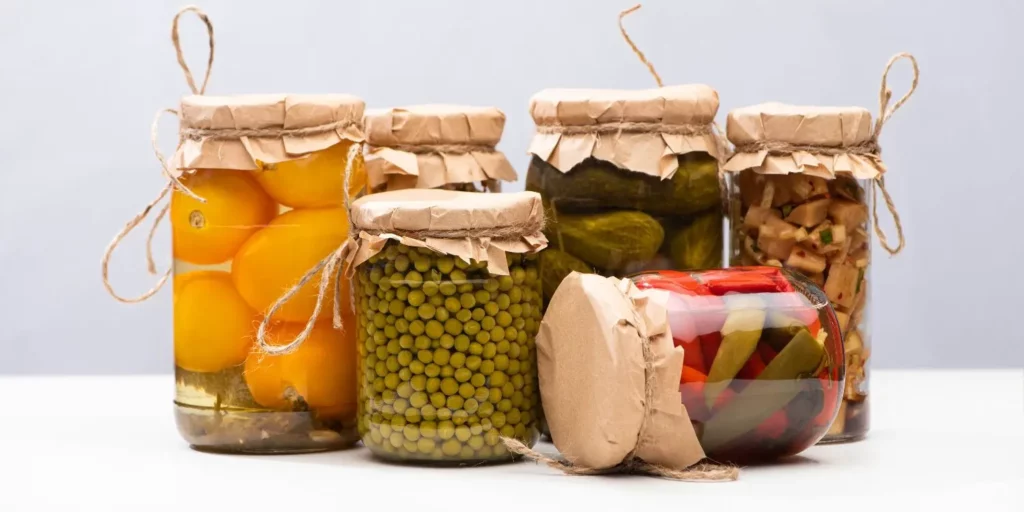
Glass jars can be vacuum-packed in two ways: with a vacuum packaging machine, which removes the air from the chamber and seals the jar during the cycle, or through heat processing, such as a water bath, when the product and procedure allow it. When using a vacuum packaging machine, the process involves checking and thoroughly cleaning the jars and lids, filling each jar while leaving some headspace, cleaning the rim, placing the lid without overtightening it, positioning the jars inside the chamber and running the specific programme for glass containers until the jar is sealed. Afterwards, check that the lid is firm and slightly concave, repeat the process if the jar has not sealed correctly and store each jar according to the type of food. Vacuum packaging does not replace refrigeration or heat treatment when either is required.
What you need to vacuum-pack glass jars
To vacuum-pack food in glass jars, you need suitable containers, lids that ensure a secure seal and a system capable of removing the air or creating a vacuum through heat:
- Glass jars with airtight lids: Strong and food-safe jars with a diameter and height that allow them to be positioned correctly inside the vacuum packaging machine.
- Metal lids with an inner seal: The lids must have a rubberised area or inner gasket that fits against the rim of the jar and maintains the seal once the vacuum has been created.
- Vacuum packaging machine or preserving pan: The jars are placed inside the chamber, where the cycle creates the vacuum and closes the lids. A preserving pan can also be used when applying the water-bath method.
How to prepare glass jars before vacuum packaging
Before filling the jars with food, it is important to prepare them correctly to ensure an airtight seal and reduce the risk of contamination. These are the main steps:
- Check the jars, lids and seals: Make sure the glass has no cracks, chips or damage, especially around the rim and thread. The lids should not be deformed or rusty, and the inner seal or rubber gasket must be in good condition.
- Wash the jars and lids: Use hot water and detergent to remove dust, grease and any residue from previous use. Pay particular attention to the rim, the thread and the inside of the lid.
- Rinse all parts thoroughly: Remove every trace of soap, as it could affect the food or prevent the jar from sealing correctly.
- Sterilise the jars when necessary: For preserves, jams, sauces or foods intended for longer storage, sterilise the containers before filling them.
- Leave them to dry on a clean surface: Place the jars and lids upside down on a clean cloth or drying rack and allow them to dry completely before adding the food.
How to vacuum-pack glass jars with a vacuum packaging machine
The process is carried out as follows:
- Fill the jars, leaving some headspace: Add the food without filling the jar to the rim. Leave a small amount of space at the top to make sealing easier and prevent the contents from coming into contact with the lid during the cycle.
- Clean the rim of the jar: Remove any traces of food, sauce, grease or moisture from the edge. The area in contact with the lid must be completely clean to achieve an airtight seal.
- Fit the lid without overtightening it: Place the metal screw lid or glass lid with its corresponding gasket onto the jar. It should sit securely, but should not be tightened excessively, so that the air can escape during the process.
- Place the jars inside the chamber: Position the containers upright and make sure they remain stable. Several jars can be vacuum-packed in the same cycle, provided their diameter and height allow them to be arranged correctly inside the chamber.
- Select the specific programme for jars: Set the vacuum packaging machine to the programme recommended for glass containers. This cycle should create the vacuum without activating the bag-sealing function.
- Start the vacuum cycle: Close the machine lid and start the programme. The pump will remove the air from the chamber and from inside the jars until the programmed vacuum level is reached.
- Wait for the chamber to decompress: Once the vacuum stage is complete, air will be allowed back into the chamber. The difference in pressure will press the lid against the rim of the jar and complete the airtight seal.
- Remove the jars carefully: Open the machine and take out the containers while keeping them upright. Avoid moving or knocking the lids immediately after the cycle.
How to check whether a glass jar has been vacuum-sealed correctly
After the packaging cycle is complete, check the lid before storing the jar. These two checks will help you determine whether it has sealed correctly:
- Check the centre of the lid: Press the centre gently with one finger. If the lid remains firm, does not move downwards and does not click, the vacuum has formed correctly. If it moves down and springs back up, the jar has not sealed properly.
- Check whether the lid is concave: View the lid from the side. When the vacuum is correct, it should usually curve slightly inwards. If it is flat, bulging outwards or visibly deformed, the jar may not have sealed correctly.
What to do if the jar has not sealed correctly
If the lid moves, clicks when pressed or is not slightly concave, the vacuum has not formed correctly. In this case, the jar should not be stored as though it were properly sealed.
First, check that the rim of the jar is clean and that the lid or gasket has no food residue, deformation or damage. If everything is in good condition, replace the lid with a new one and repeat the vacuum cycle using the packaging machine.
If you cannot repeat the process immediately, store the jar in the refrigerator and consume the food within a short period. If the contents show an unpleasant smell, changes in colour, a bulging lid or any sign of spoilage, they should be discarded.
Which foods can be vacuum-packed in glass jars?
Vacuum packaging in glass jars can be used for a wide variety of foods, provided that the container, lid and packaging process are suitable for the product.
- Sauces, jams, creams, pickles and other liquid foods
- Nuts, sweets, coffee, spices and low-moisture products
- Ready meals and cooked foods
Which foods require special precautions when vacuum-packed in glass jars?
Although many foods can be vacuum-packed in glass jars, some require greater control over temperature, hygiene and any subsequent treatment. Vacuum packaging helps reduce contact with air, but it does not replace refrigeration, pasteurisation or sterilisation when the product requires them.
| Type of food | Main precaution |
| Freshly cooked food that is still hot | It must be cooled properly beforehand to prevent condensation, sealing problems and inadequate preservation. |
| Meat, fish and seafood | Always keep them refrigerated. Vacuum packaging does not make them suitable for storage at room temperature. |
| Ready meals containing meat, fish, eggs or dairy products | They require hygienic handling, proper cooling and refrigerated storage before and after packaging. |
| Low-acid foods | They require appropriate heat treatment if they are to be stored outside the refrigerator. Vacuum packaging alone is not sufficient. |
| Fermented foods or products that generate gas | They may increase the pressure inside the jar, causing the lid to lift or the vacuum seal to fail. |
| Foods with a high liquid content | Leave enough headspace at the top and prevent the contents from reaching the gasket or lid. |
| Foods showing signs of spoilage | Products with an unpleasant smell, mould, changes in colour or an unusual texture should not be packaged. |
In all these cases, the jar should be stored according to the specific needs of the food. When there is any doubt about its safety, it is best to keep it refrigerated and consume it within a short period.
How long does food vacuum-packed in glass jars last?
How long does vacuum-packed food last? Its shelf life in glass jars depends on the type of product, the quality of the seal and the storage temperature. Dry or stable foods, such as nuts, coffee or pickles, may last for weeks or months if the jar has sealed correctly and is stored in a cool, dry place. Sauces, creams and ready meals, however, must be refrigerated and usually have a much shorter shelf life. For meat, fish and other perishable products, vacuum packaging does not replace refrigeration or an appropriate heat treatment.
How to store glass jars after vacuum packaging
After creating the vacuum, it is important to store the jars under the appropriate conditions for each type of food.
Check and label the jars
Make sure the lid is firm, slightly concave and does not click when pressed. It is also advisable to label each jar with its contents and the packaging date so that the storage period can be monitored more easily.
Store each food at the correct temperature
- Perishable foods, such as ready meals, fresh sauces, dairy products, meat or fish, must be kept in the refrigerator.
- Nuts, sweets and other dry products can be stored in a cool, dry place away from direct sunlight.
Keep the jars upright
Store the jars in an upright position on a stable surface, without placing excessive weight on the lids. This prevents the food from remaining in constant contact with the sealing area and makes it easier to detect leaks or a loss of vacuum.
Check the jar before consumption
Before opening it, make sure the lid is still concave and check for leaks, bulging, mould, unusual smells or changes in colour. If there are any signs of spoilage, the food should not be consumed.