

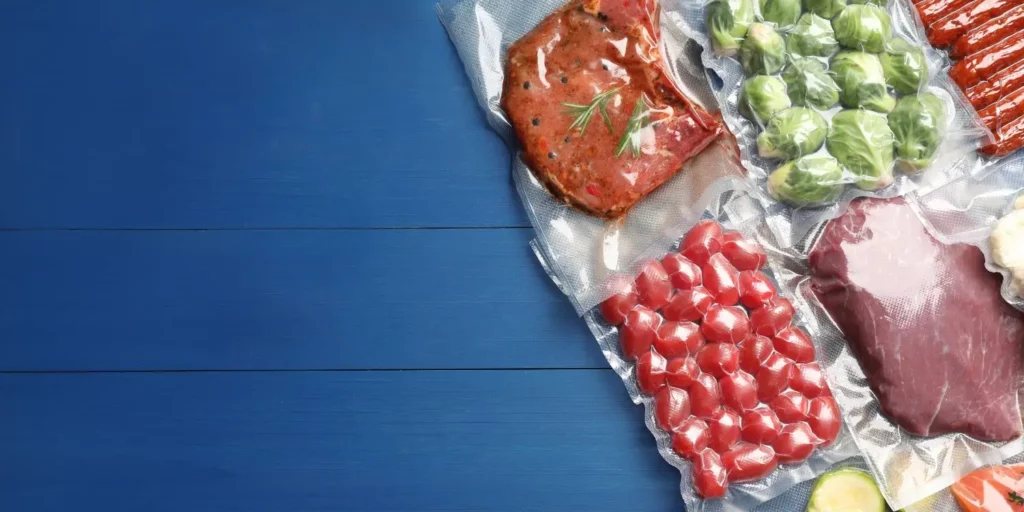
You can vacuum seal meat, fish, cheese, cured meats, fruit, vegetables, cooked dishes, dry foods, nuts, grains, liquids, sauces and marinated foods, although some require preparation beforehand. Vegetables may need blanching, cooked foods must be cooled before vacuum sealing, and liquids require specific controls during the process. However, raw garlic and onions, fresh mushrooms, fermenting foods or products that already show signs of spoilage should not be vacuum sealed directly.
Foods That Can Be Vacuum Sealed
Vacuum sealing can be used for a wide variety of foods, from meat and fish to cheese, prepared meals, dry foods and liquids. The key is to adapt the process to the type of product: some can be sealed directly, while others need to be cooled, blanched or processed using a specific vacuum sealing program.
| Type of food | Examples | Main Recommendation |
| Meat and Fish | Beef, pork, chicken, fresh fish, seafood | Envasar frescos y mantener siempre la cadena de frío |
| Cheese and Cured Meats | Mature and semi-mature cheeses, cured ham, chorizo, cured pork loin | Ideal for extending shelf life and protecting against oxidation |
| Fruit and vegetables | Blanched vegetables, cut fruit, prepared vegetables | Some require preparation before vacuum sealing |
| Cooked Dishes and Prepared Meals | Cooked meats, rice dishes, pasta, creamy soups, ready meals | Cool properly before vacuum sealing and keep refrigerated |
| Dry Foods | Nuts, cereals, coffee, spices | Vacuum sealing helps protect them from moisture and oxidation |
| Liquids, Sauces and Marinades | Sauces, stocks, creamy soups, marinades | Use suitable equipment and programs to prevent them from boiling during vacuum sealing |
Meat and Fish
Meat and fish are among the foods best suited to vacuum sealing. Whole cuts, steaks, fillets, portioned meat, poultry, fresh fish and seafood can all be vacuum sealed, provided they are in good condition and stored at the correct temperature afterwards.
Vacuum sealing reduces contact with oxygen, protects food during storage and helps preserve its texture and quality. It is also particularly useful before freezing, as it reduces dehydration and freezer burn. For approximate storage times by product and storage method, see our article on how long vacuum-packed food lasts.
Cheese and Cured Meats
Cheese, sausages and cured meats are particularly well suited to vacuum sealing. Mature and semi-mature cheeses, cured ham, cured pork loin, chorizo and salchichón can be stored in portions or as whole pieces, reducing their exposure to air while making storage and distribution easier.
For sliced products, vacuum sealing allows portions to be prepared in advance and protected until use or sale. For certain foods, particularly when it is important to prevent compression, modified atmosphere packaging (MAP) using gas injection can also be used.
Fruit and vegetables
Many fruits and vegetables can also be vacuum sealed, although they require more care than other foods. Cut fruit, prepared vegetables and certain other vegetables can benefit from vacuum sealing to reduce oxidation and aid preservation, but not all should be placed directly into the bag.
Some vegetables need to be blanched beforehand to slow enzyme activity and better preserve their qualities. Others require specific temperature and storage conditions due to their characteristics. Proper preparation before sealing is therefore particularly important for this food group.
Cooked Dishes and Prepared Foods
Vacuum sealing is very useful for cooked dishes, ready meals and prepared foods, both in catering and food production. Cooked meats, rice dishes, pasta, purées, creamy soups, side dishes and complete meals can be vacuum sealed to organise production and preserve portions until they are needed.
The key is to cool food properly before vacuum sealing it. Sealing products while they are still hot can cause condensation, interfere with the vacuum sealing process and compromise their subsequent preservation.
Dry Foods, Nuts and Cereals
Low-moisture foods, such as nuts, cereals, coffee, spices and certain dry products, are particularly well suited to vacuum sealing. Reducing contact with air and moisture slows oxidation and helps preserve characteristics such as aroma, flavour and texture for longer.
In addition to bags, some of these products can be stored in rigid containers. For these applications, vacuum sealing in glass jars can also be a useful option, particularly for nuts, coffee, spices, sweets and other dry products.
Liquids, Sauces and Marinades
It is also possible to vacuum seal liquids, sauces, stocks, creamy soups and marinated foods, but they require greater control during the process. As the pressure inside the chamber decreases, liquids can reach boiling point at a much lower temperature than usual.
For this reason, professional vacuum sealers may incorporate dedicated liquid control or boiling point detection systems, which stop the vacuum process at the right moment and prevent the contents from escaping the packaging or reaching the pump. When marinating, vacuum sealing also helps the liquid penetrate the food and can significantly speed up the process.
Foods That Need Preparation Before Vacuum Sealing
Not all foods should be placed directly in a vacuum sealer. Some require preparation beforehand to better preserve their properties, prevent problems during the vacuum cycle and ensure a suitable result. These are the most common cases:
| Type of Food | Recommended Preparation | Why It Matters |
| Vegetables | Blanch and cool before sealing | Helps slow enzyme activity and better preserve colour, texture and quality |
| Cooked foods | Cool completely before vacuum sealing | Prevents condensation inside the packaging and storage problems |
| Liquids and high-moisture foods | Chill thoroughly and use a dedicated liquid program | Prevents the product from boiling during vacuum sealing or reaching the pump |
Vegetables That Need Blanching
Many vegetables, such as broccoli, green beans, carrots, asparagus and cauliflower, should be blanched before vacuum sealing, especially if they will subsequently be frozen. The process involves briefly immersing them in hot water, then cooling them immediately to stop the cooking process.
Blanching helps reduce the activity of enzymes that continue to act after harvesting and can cause changes in colour, flavour or texture. Once blanched, vegetables must be cooled and dried properly before being placed in the bag.
Cooked Foods That Need Cooling
Cooked dishes, prepared meats, rice dishes, pasta, purées and stews should not be vacuum sealed while still hot. Their temperature must first be reduced to ensure they are sufficiently cold.
Sealing hot food can generate steam and condensation inside the bag, interfere with the vacuum process and affect the seal. Once sealed, the product must also be kept refrigerated or frozen according to its storage requirements.
Liquids and High-Moisture Products
Sauces, stocks, creamy soups, marinades, fish and other high-moisture products require special control during vacuum sealing. As the pressure inside the chamber decreases, liquids can begin to boil even at low temperatures.
It is therefore advisable to work with thoroughly chilled products and use a vacuum sealer designed for this type of application. Some Zermat machines can incorporate a boiling point detection control system, which identifies when the liquid starts to generate vapour and stops the process at the right moment, preventing spills and protecting both the food and the machine.
Foods That Should Not Be Vacuum Sealed
Vacuum sealing is suitable for many foods, but some products should not be sealed directly or require specific treatment beforehand. In some cases, the absence of oxygen can increase certain microbiological risks; in others, the food itself produces gases or loses quality inside the packaging.
| Type of Food | Why It Should Not Be Sealed Directly | What to Do |
| Raw garlic and onions | The absence of oxygen can create favourable conditions for anaerobic microorganisms | Avoid vacuum storage without appropriate treatment and controls |
| Fresh mushrooms and fungi | They continue to respire and can deteriorate quickly inside the packaging | Cook, treat or preserve them using an appropriate method before vacuum sealing |
| Fermented foods | They may continue to produce gases after sealing | Avoid vacuum sealing while fermentation is still active |
| Spoiled foods | Vacuum sealing does not eliminate microorganisms or restore freshness | Discard any product showing signs of spoilage |
Raw Garlic and Onions
Raw garlic and onions are not good candidates for prolonged vacuum storage without specific treatment. Removing the air creates an environment with very little oxygen which, combined with unsuitable temperatures or storage conditions, can encourage the growth of certain anaerobic microorganisms.
For this reason, vacuum sealing should not be used to store these raw products for long periods without first applying an appropriate preservation procedure.
Fresh Mushrooms and Fungi
Fresh mushrooms and fungi remain biologically active after harvesting and can deteriorate inside sealed packaging. Vacuum sealing can also affect their texture and appearance if they are sealed directly and stored for too long.
If you want to vacuum seal them, it is preferable to cook them or apply the appropriate treatment beforehand, then keep them at the required storage temperature.
Fermented Foods or Foods That Produce Gases
Products undergoing fermentation, such as certain doughs, fermented vegetables or other foods containing active microorganisms, may continue to produce gases after sealing. This can cause the bag to swell, compromise the seal or increase the pressure inside the packaging.
Before vacuum sealing, make sure fermentation has finished or use a packaging system specifically designed for that product.
Foods Already Showing Signs of Spoilage
Vacuum sealing does not restore spoiled food or eliminate microorganisms that have already developed. Products with an unpleasant smell, mould, unusual colour changes, altered texture or any other sign of spoilage should not be sealed in an attempt to extend their shelf life.
The best results always come from using fresh food in good condition, as vacuum sealing helps maintain the product’s initial condition but cannot improve it.
How to Store Food Correctly After Vacuum Sealing
Vacuum sealing helps protect food, but proper storage afterwards remains essential. Once sealed, each product must be kept at the appropriate temperature, the seal must remain intact, and storage times must be monitored to prevent loss of quality or food safety issues.
- Maintain the cold chain for meat, fish, cooked dishes, dairy products and other perishable foods.
- Store in the fridge or freezer according to the type of food and how long you intend to keep it.
- Label each package with its contents and sealing date to help track storage time.
- Check that the seal remains airtight and that the bag has no leaks, punctures or air entering it.
- Avoid sudden temperature changes during storage and transport.
- Keep dry, shelf-stable foods in a cool, dry place away from light when refrigeration is not required.
- Defrost products in the fridge, avoiding leaving them at room temperature for long periods.
- Check the appearance, smell and condition of the packaging before consumption, and discard the product if there is swelling, leakage, unusual changes or signs of spoilage.
Frequently Asked Questions
Can You Vacuum Seal Food That Has Already Been Vacuum Sealed?
Yes, provided the food is still in good condition and has been stored correctly. If the original packaging has been opened, it can be vacuum sealed again using a clean bag and creating a new, complete seal.
Can You Vacuum Seal Frozen Food?
Yes. Vacuum sealing helps protect frozen food against dehydration, oxidation and freezer burn, making it particularly useful for meat, fish and other products stored for long periods.
Can You Vacuum Seal Hot Food?
It is not recommended. Cooked food must be cooled properly before sealing, as heat produces steam and condensation, which can make sealing more difficult and affect subsequent preservation.
Can You Vacuum Seal Food Containing Liquid or Sauce?
Yes, but greater control is needed during the process. It is advisable to work with cold products and use a vacuum sealer with a liquid program or boiling point detector to prevent the contents from boiling or reaching the pump.